
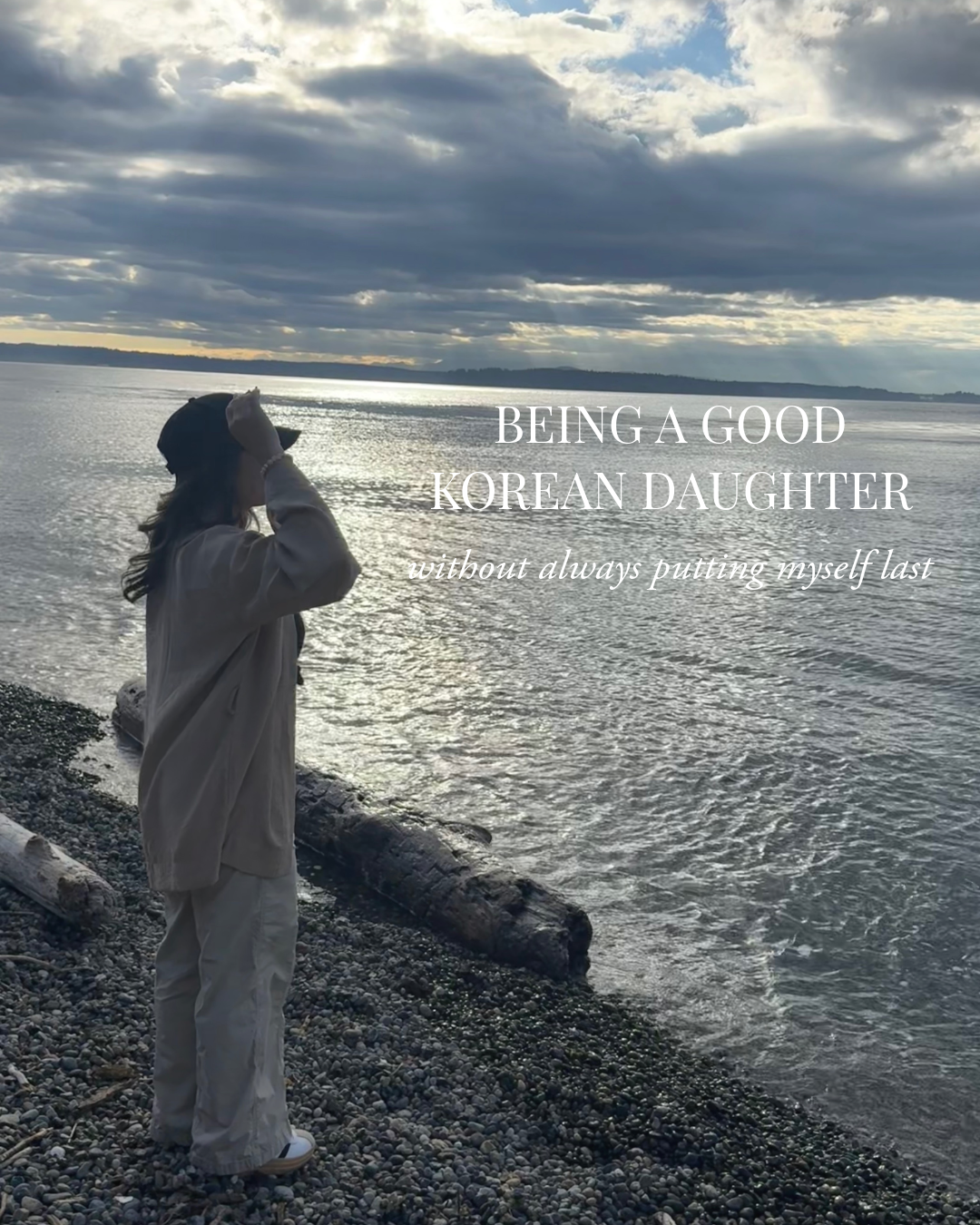
There are certain manners that feel less like things I was taught and more like things that live in my body. Respect your elders. Let them eat first. Make sure everyone else has what they need. Pour their drink before your own. Be considerate. Be helpful. Don’t be selfish.
I’m Korean, and being a filial daughter has been ingrained in me for as long as I can remember. Respect isn’t just something you say. It’s something you show in the small gestures, in the way you speak, in who you serve first, and in how aware you are of the people around you.
There are parts of that upbringing that I genuinely love. I value manners. I value consideration. I love the idea of taking care of our elders and acknowledging what they have done for us. I also think some of that awareness of other people is disappearing. Especially in younger generations, I sometimes notice how rare it can feel for people to look around the room, notice who needs a seat, make sure everyone has been served, greet people properly, or simply understand that their behavior affects the people around them.
I don’t think consideration is outdated. If anything, I think we could use more of it.
That’s what makes this complicated for me. I don’t actually want to unlearn all of it. I don’t want putting myself first to mean becoming someone who only thinks about herself. I don’t want to lose the instinct to notice other people, because that instinct is part of how I love, how I show respect, and how I move through the world.
What I’m trying to understand is where consideration ends and self-erasure begins.
I noticed it recently at my own birthday dinner. Without even thinking, I was making sure my dad and stepmom were served before I was. It was such a small thing, but once I noticed it, I couldn’t stop thinking about it. This was my birthday. No one would have thought I was rude if I had simply made my own plate first, and yet my instinct was still to look around and make sure everyone else was taken care of before I thought about myself.
That instinct runs deep.
I’m usually the person noticing, anticipating, and making sure everyone else is okay. I’m the one checking whether someone has enough food, knows the plan, has what they need, or feels comfortable. I’ve done it for so long that I sometimes wonder whether I’ve unintentionally taught the people around me that I don’t need that same kind of care.
Maybe I’ve made being the capable one the norm.
And if I’m always stepping into that role, where does that leave room for someone to look at me and say, “You sit down. I’ve got this”?
I want that sometimes. I want to be served. I want someone else to notice what I need before I have to say it. I want to be able to relax without automatically scanning the room for who might need something from me. I don’t think that makes me entitled or selfish. I think I’m finally admitting that receiving care matters to me too.
I’ve also started noticing how easily other people’s feelings can take precedence over mine. If someone else is upset, uncomfortable, stressed, or going through something, the energy often shifts toward making sure they’re okay. Because I’m generally capable and can hold a lot, there can be an assumption that I’ll be fine.
But being able to handle something doesn’t mean I don’t have feelings about it. Being less reactive doesn’t mean my feelings matter less. Caring about another person’s discomfort doesn’t require me to make my own discomfort disappear.
For a long time, I probably participated in that dynamic without realizing it. I anticipated. I handled. I adjusted. I made myself useful. I rarely stopped to ask whether anyone was making the same effort to understand what I needed.
Now I’m trying to figure out what I actually want to keep and what I’m ready to put down.
I want to keep the manners. I want to keep the respect. I want to keep the awareness of other people, because I think there is something beautiful about moving through the world with consideration. I don’t want to become so focused on protecting my own needs that I stop noticing everyone else.
But I also don’t want consideration to be something I only extend outward.
Sometimes what we call people-pleasing isn’t only personal. It can have history behind it. Culture. Family roles. Generations of women who showed love through service, sacrifice, attentiveness, and putting everyone else’s needs before their own.
I can honor that history without repeating every part of it.
Maybe being a good daughter doesn’t mean automatically making myself responsible for everyone. Maybe I can respect my family and still have needs of my own. I can care about how other people feel without automatically deciding that their feelings deserve more attention than mine. I can serve someone I love and also allow someone to serve me.
And maybe I can even make my own plate first sometimes.
At this point in my life, putting myself first doesn’t look like some dramatic declaration of independence. It’s much quieter than that. It’s noticing the moments when I automatically defer and asking myself whether I actually want to. It’s letting my feelings exist without immediately minimizing them because someone else might be having a harder time. It’s allowing someone to care for me without immediately feeling like I need to earn it or return the favor.
I don’t think I need to choose between being a good Korean daughter and being a woman who takes up space.
There has to be a middle ground where I can keep the reverence, generosity, manners, and awareness I was raised with while also remembering that I am one of the people in the room who deserves consideration.
Maybe the lesson isn’t that I need to stop taking care of people. Maybe it’s that I need to stop assuming I should always be the one doing it.
I still want to be a good daughter.
I just want to remember that daughters deserve to be cared for, too.
Leave a Reply